WK4DS Amateur Radio Blog
Search Posts
K-6307 Herky Huffman/ Bull Creek WMA Activation AAR
This was a spontaneous activation of sorts… we went from Melbourne FL to basically Tampa today and on the way I had about an hour to get in a quick POTA activation. So I get on the app and start looking for parks along the way.

So I decided to go to K-6307 Herky Huffman WMA and I chose this one on purpose as it is literally across the street from another POTA park K-6330 Triple N Ranch WMA and on the map there is a road into Triple N Ranch less than 1/4 mile from the parking area at K-6307 so it isnt a 2fer but they are close enough that I could feasibly activate both in a short time. Just pick up the gear enough to drive down the road to the other entrance and park there to do the other park. Seemed simple enough, well it wasnt as it turns out.

The calendar was in that box you see in the above photo. It was nice to know if there was a hunt going on or not. You know to avoid bullets and such. Lol.
So off we go and immediately leave the hustle and bustle of Melbourne and it turns into farmland surrounded by wilderness all at once...or so it seems. A stark contrast to the coast for sure just a few miles away. It was kinda neat seeing the stark contrast like that actually. It just showed us how close nature really is sometimes if you want to go see it.


This is where I chose to setup today at K-6307. It is a parking area for the Herky Huffman/Bull Creek WMA and the truck is so far back next to the fence because that was in the shade. It was in the mid 80s and in the sun that gets hot pretty quick. When I did an about face from the same spot, you see the next image(below). I am standing on the shoulder of the road. This is a different POTA park…so close yet so far away.


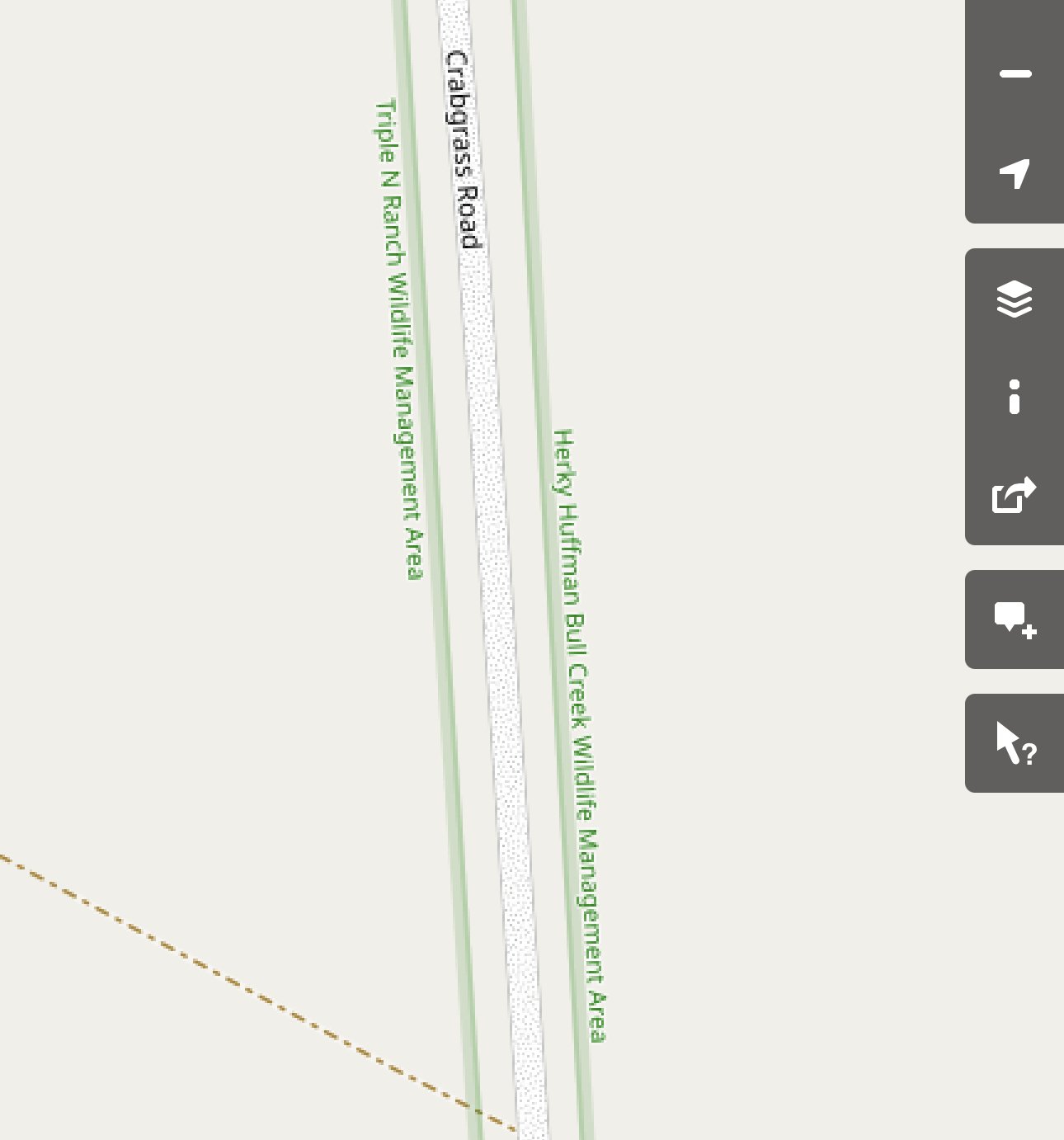
As you can see on the above image, the road literally divides the two parks and is in neither of them so there is no way to get a 2fer here. BUT if I can gain access to both then I should be able to get a little 2 park rove instead, at least that is the idea.
Well, I drove down the road a little to the gate for Triple N Ranch and it was locked. Figures, you win some, you lose some. With that I decided to simply operate at the other park as long as possible instead. This netted almost 40 QSOs into the log which is awesome! The hamstick really is a great portable antenna for ops such as this where time is kinda short and deployment would be tough for a wire antenna as the underbrush here is really sharp…

Once I had a spot picked I had to move the truck back and fourth a little to get the antenna in a spot where it didnt touch any tree branches so I could radiate as good as possible. Especially since it is near the tip of the antenna and that is where the voltage is the highest. Also in the essence of saving time, I once again only put out one radial as this speeds up deployment a good bit and seems to net almost as good results.

Also of note is that we were in transit between two towns here as well so Teresa decided to simply take a nap in the truck while I operated from the bed cover. That is a luxury of CW that voice modes do not enjoy, quiet operation in low noise areas.
Below you can just see the radial running away from the truck and wait till you see the QSO map of how well it works!

Here is the operating position for this activation, the bed cover. If you will notice, you don’t see the battery. This is because I am powering the rig from a power cord I made up and put in the cab for winter ops. It is wired straight to the batteries with a fuse and powerpoles. It is just long enough to reach the bed cover if I set the radio in this location. Pretty smooth if you ask me. Lol. I like to spread the stuff out if I have room so I don’t bump a knob or something. The only knob I typically use once I setup on a frequency is the multifunction knob for RIT control occasionally. I adjust CW speed these days on the picokeyer so that is lifted from the radio too. Super simple operating procedure to be honest.

This is what it looks like to have decent band conditions, a 15 watt transmitter, and a 20 meter hamstick with a tuned counterpoise radial attached to it. This is a good day in my book. This happened in just under an hour too so not too shabby if you ask me. I had a good time so that is all that matters to me. LOL.
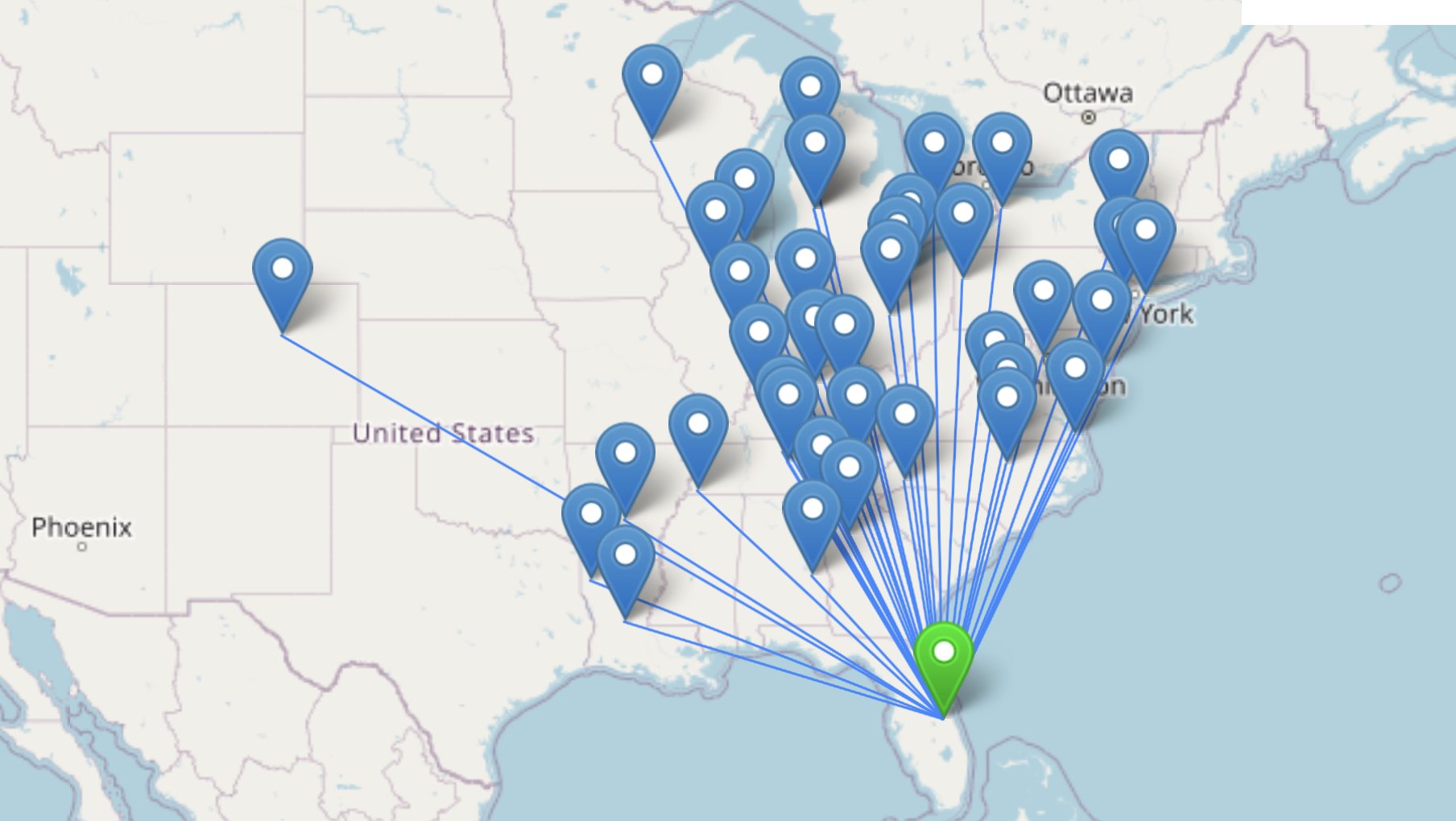


Once my time had ran out, I called QRT and we headed on down the road to our next location for the night. All in all it was a great day for POTA even thought I couldn’t net two parks in one day. It just means I need to return to the other park now to activate it…that is a great excuse to go to Florida! Until next time, I will look for you on the bands!
72
de WK4DS - David
Activating K-1832 Anastasia SP in Florida!
Today I got to activate another new-to-me park! Anastasia State Park (K-1832) located in St Augustine, Florida.

Today was a special day for two reasons. The first reason is I am in St Augustine Florida and the second is that I had about an hour to fit in a POTA activation. So I drop off the wife at the yoga studio and from this parking lot I have about 1 hour and ten minutes to goto a park, setup a radio, get 10 contacts, tear it all back down, grab some photos for the blog post and go back to the yoga studio. I can report that I was successful in the mission.
So I chose Anastasia State Park because of its proximity to the yoga studio. It was a 7 minute drive to the spot where I setup the radio from the yoga studio parking lot…there goes 14 minutes of my 70! Part of the game so we are off!

There is a park access fee to use Anastasia State Park. It is 4$… Not bad for such a lovely place complete with a snack shop and even a restaurant from what I could tell. Not to mention THE BEACH! Did I mention it has BEACH ACCESS?!?!? Well, it is some of the most beautiful beach I have seen in the mainland USA to be quite honest about it.

The scene above was down the street from where I setup for the activation. This is the life! As you can see the salt water (The Atlantic Ocean) was also in close proximity so propagation should be good! It also had good “facilities” at this location too as I had just finished drinking a bunch of coffee… lol This is not a perk I am used to having at most locations. There is a restroom at the canyons edge back home at Cloudland Canyon next to the parking lot but my usual spot at the frisbee golf course has no such luxury so I was glad to see it today. Sometimes its the little things that make all the difference…


The location I chose was next to the shop where you rent small watercraft like kayaks and such. Since it was a Monday morning there were practically no people there. In the photo above you can see the sand dunes at the beach in the background. This is a good spot for POTA. Salt water has a reputation for being one of the best ground planes in radio and I normally dont have access to salt water so I get really excited when I can operate near salt water.

The parking area is on the side of the road (notice the wind swept trees, isnt that cool?) and backs up to a fence so I backed in and set up the 20 meter hamstick on the truck. Since time was of the essence here, I opted for a single radial and ran it over the fence and out into the recreational space on the other side. I threw the nanoVNA on it right quick and the SWR was good at 1.3:1 so on the air I went! I opted to hop straight way on 20 meters as this band usually has the highest percentage of operators of all the bands. This proved to be a wise decision too as I secured the activation in short order thanks to the plentiful hunters that sought me out today.


I get setup in the truck and power on the radio to a very active band, also giving me hope! So I start calling and it doesn’t take long to get a reply. Then the gates open! Wow! There were so many hunters! I actually got a little overwhelmed and couldn’t send code for squat!!! (Apologies to all of you guys and gals where I butchered your call sign trying to send decent code) So I just took a deep breath and started with the loudest stations and cleared the pileup in a little while. Since I was in Florida and not at home I could hear stations that are normally deaf to my radio and antenna combination. I logged several Tennessee contacts today and even one or two from the west coast!

I might modify this operating position just a little more with time, but it is almost perfect now. I would like to make a small stand that sits in front of the armrest that will hold the N3ZN key and PICO keyer allowing me to move the logbook a little more forward. Currently the bottom of the page is hard to reach for my old back as it is almost behind me. Lol. But other than that, this staion setup is going to end up being my wintertime POTA activation setup for the upcoming winter.
Looking at the QSO map shows that the skip distance today for my hamstick lies in the 500 to 1200 mile range and the second hop is coming down on the west coast. The signal reports on these stations (west coast) today were rough. I struggled to copy the call sign on one for certain and probably both. Still got them into the logbook though so we are good. But it did reveal to me how much energy is lost in that second “hop”. It was significantly weaker copy on those stations. I am going to speculate that it was probably 6 full S units of signal weaker. I dont use the S meter as a strict reference but today I found myself comparing signals such as these weak ones running in the S2-3 range and the Tennessee stations booking in at S9!

When I am back at my home the west is still difficult but at those times I normally have both counterpoise wires setup and this seems to alter the takeoff angle a little and I will get Utah, Colorado and Arizona and even the Dakotas sometimes so the other counterpoise seems to make a big difference in lowering the take off angle some to improve propagation to those areas for me. I am also fortunate to be where there is an abundance of ham radio operators so I can easily secure my activation due to the sheer density of hams most of the time. Actually I have only failed to secure the activation one time and that was my fault entirely, not because of a lack of hunters, but me not calling where they were hunting… Anyway, that is another story and is in the blog somewhere if you would like to read that sometime.


Looking back over the log and seeing all those Tennessee contacts makes me happy to know that I was able to activate a park in Florida even if it was only for an hour, it was still a great time and I was able to get a bunch of people into the log that day that is always a good reason to activate! Till next time…
73
WK4DS - David
Counterpoise testing during a POTA Activation
Today involved some experimentation as well as a POTA activation. I tested some changes to the radials I use on my hamstick system out of curiosity and came away with some interesting results. Read on to see the AAR and the results of this test.

Today was supposed to be a quick little activation and then I was going to do a few other things, but plans are made to be changed from what I can tell as the bands were doing well for me and I stayed longer than I planned. But then the sun can bring that full circle as you will see below.

The operating position today shown above, was on top of the hill at the frisbee golf course and on the bed cover of the truck. Turns out that was somewhat of a bad idea. It just got hotter as the day progressed and the sun quickly came over the door I was using to shade me. This is what ultimately caused me to go QRT when I did as I was having a decent run on 20 meters at the time. It was just plain hot, with the sun seemingly cooking my right ear while I was working ops. I did enjoy working several ops today I have seen in my log before plus some that I have not. I even got a Canadian which is always nice.

This is probably the best image of my 40m hamstick and mount I have ever gotten. With the sun in the right spot, the whole antenna lit up well enough for the camera to get it. The setup is not actually mobile as it requires a counter poise to get it to work it’s best, but wow… it worked really well today, especially well today actually for some reason. I can hear surprisingly well on these tiny HF antennas too. I own three different brands of hamsticks (covering 40, 30, 20, 17 and 15) and can not tell a difference in any of them as far as how well they work. They all just work really well.

These two photos tell a story about what was happening at the location today on 30 meters. When people talk about having RF noise at a location, this is what it looks like on a radio that doesn’t have a waterfall display. The photo above is what the noise floor looked like when the RF noise was not present and the bottom image is what it looked like when it started up. It also was not constant, but appeared to by cyclic in nature as it would spool up and would just be some sort of hash for about 20 seconds and then it would just go away for about 30 seconds maybe longer. I would be able to work one contact and then it would come back and if the hunters were not transmitting with an S9 signal, I couldn’t hear them. This is really frustrating and is one of the reasons I don’t activate 30 meters more than I do. But so it life and how much fun would it be if we never had problems to solve? It would get pretty boring pretty fast… Even with this RF hash coming in and out, I was still able to get 9 calls in the log on 30 meters today so I count that as a win anyway.

The next thing I want to share about today has to do with the antenna system I was using. I have made tuned radials for all of my hamstick except the 15 meter unit (I have not deployed it yet, but soon I will.) I went to a lot of trouble to tune these radials too, with a ton of time at home working on this. Well, it turns out that I didn’t need to do that for the 30 meter hamstick at all. I deployed my nanoVNA today and did some measurements on the hamsticks to confirm nothing has changed with them and figured out something just out of curiosity. Seems that the radials for 40 & 20 meters work just fine on 30 meters too. This means one set of radials for all three of those hamsticks. Next outing I will take the 17 and 15 meter hamsticks and tune them up and see if the same radials will work on them too…fingers crossed. I am always looking for ways to simplify my station setup and the radials has been one of the slowest things to deploy of all the gear for POTA with the hamsticks. So if I can get it down to just the two radials and not having to remember the color codes for them and such I will count that as another win in my book.

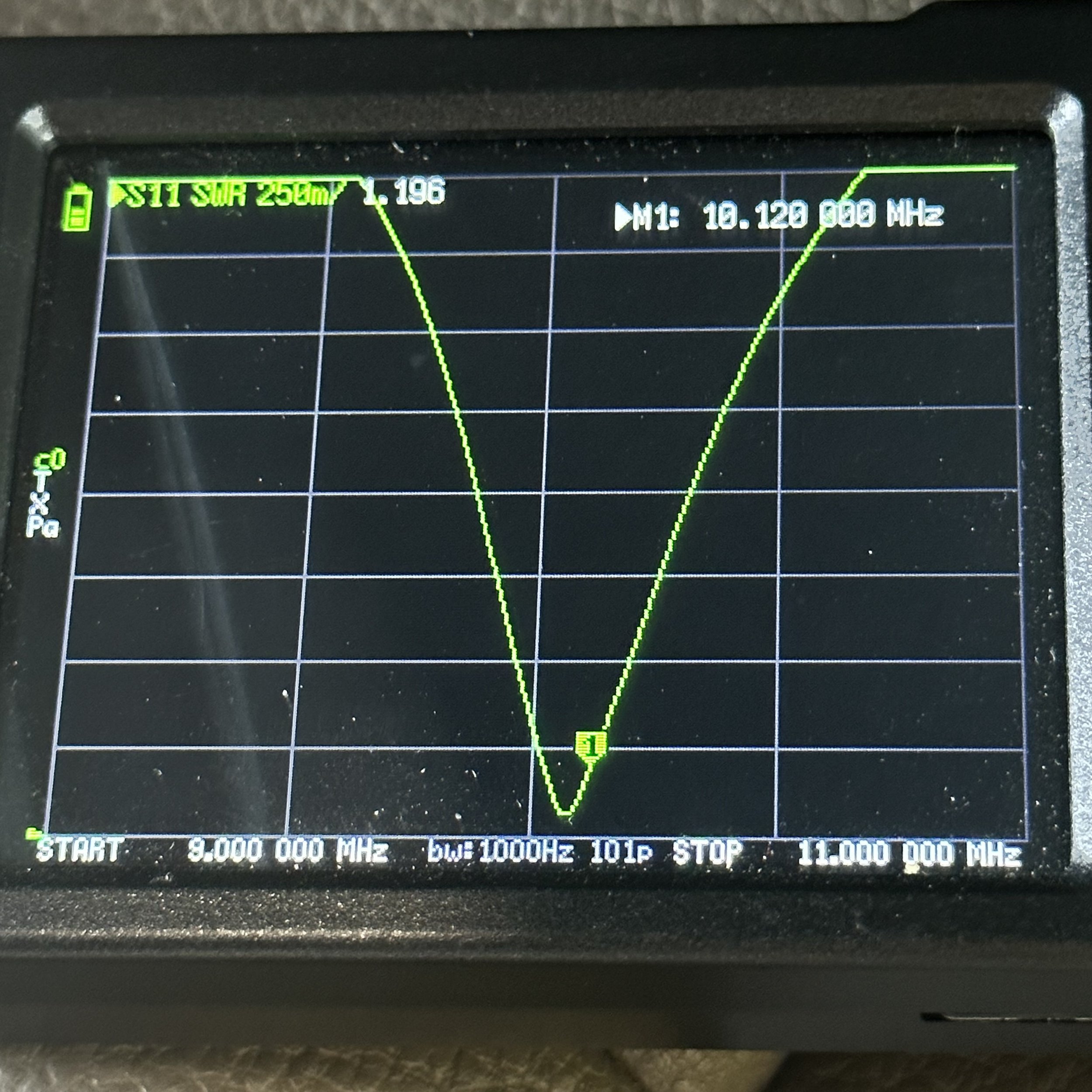
The above photo shows that the antenna is fine on the 20 meter CW section, even though it is technically low on the best part of the chart, it is only 1.188:1 where I normally work on the 20 meter band. Well, knowing that, below is what it looks like on 30 meters with the 40/20 meter radials instead of the tuned radials I made up for just for the 30 meter band. Pretty crazy huh? Looks almost identical to the 20 meter chart and even almost matches the 20 meter SWR value. I was blown away by how good this turned out and to think I have never even tried it before today… Another thing I noticed about hamsticks in general is that they act like bandpass filters across the HF spectrum, I did open up the range on the nanoVNA and it does have other nulls IN THE VHF SPACE, but each hamstick has ONLY ONE spot they are resonant at in the 0 - 30mhz spectrum. No multiple harmonics like the EFHW, just one really deep SWR null is all you get. So plan accordingly, but to be honest, it works really well so I am not going to complain. I think this might actually work as a band pass filter but have not had the chance to test it yet. Maybe I will set this up at winter field day and see what it sounds like there. That should do it.
Here is the log from this activation and the signal reports look good for a mismatched antenna on the trailer hitch of my truck. I was using 15 watts though so that might have helped some. I have been sending with more power lately to just play with the Argonaut to see how hot the heat sink gets at various power levels and on CW it barely gets warm at all with 15 watts of RF so I am really happy with that. I am doing this test since i changes the fan a while back to reduce the fan noise as the factory fan is quite loud. I have a blog post showing what I did with this if you are interested in that.


All in all I learned something new and had a great activation at the same time. So till next time go get your radio out and make some contacts on it!
Testing a new antenna AND CW key during a POTA activation!
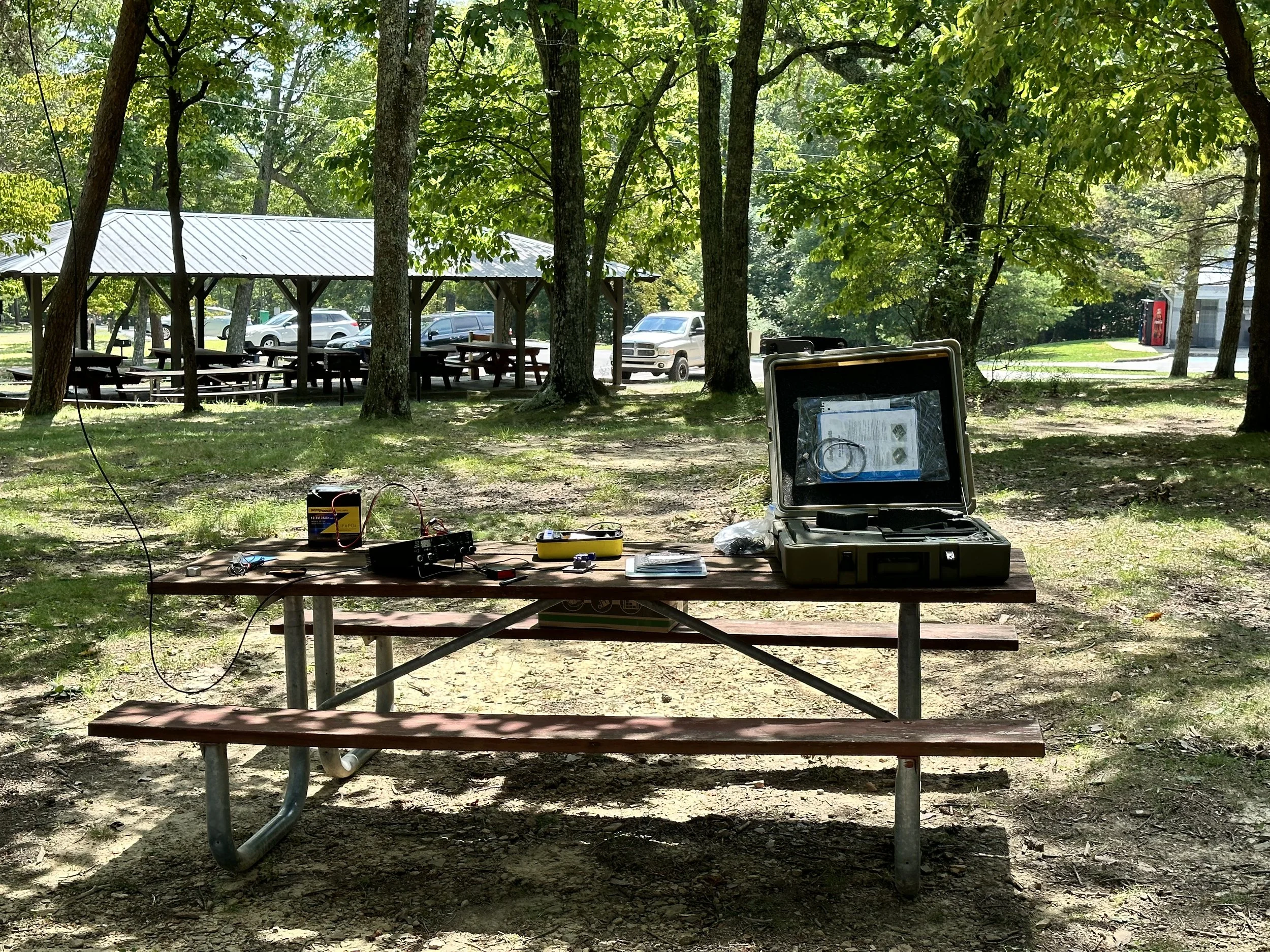
I decided to pack up the Argonaut 5 and go activate Cloudland Canyon today to get some much needed air time and wanted to try out my new POTA key that I picked up at the 2023 Hamfest in Huntsville a little while back (actually you will be reading this in the future as I picked up the key last weekend but so is the life of a blog post) So follow along and look at what I found out today while making a few contacts from K-2169.
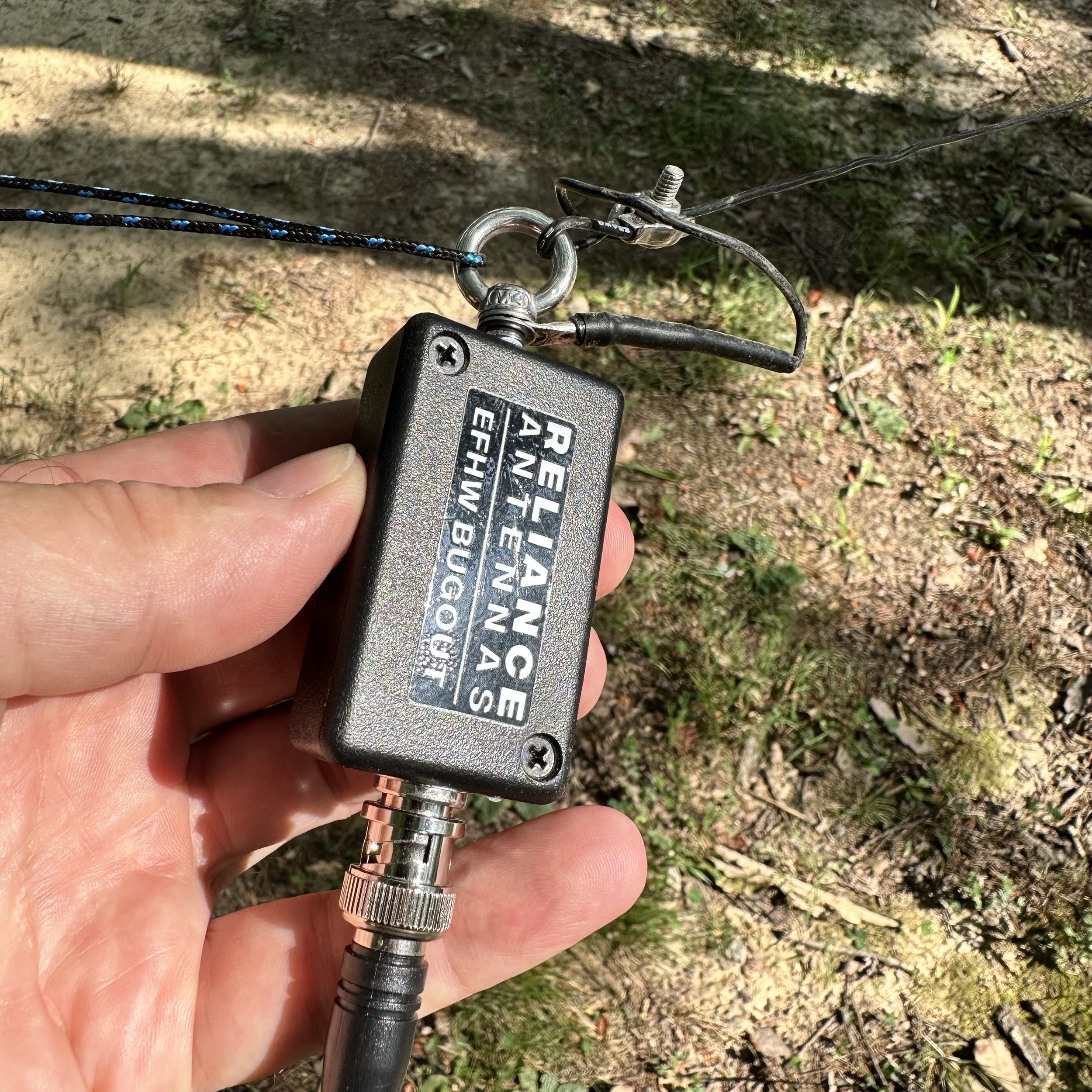
I also decided to do some testing of the Reliance Antenna Bugout 40 EFHW I had bought from N3VAN who was making them and selling them on the QRZ forums. The antenna looks really good with lots of attention to detail in the construction. I have never used an antenna that doesn’t have radials or a formal counterpoise at all. This one uses the coax shield as the counterpoise so, in theory, you don’t need a counterpoise at all. (Come to find out, you can bend the rules of EFHW antennas if you do add a counterpoise) I strung it up in the air between two trees out near the bluff at the park. This may have doped my results, but I am doing a test anyway so why not, right? The far end is about 30’ in the air. The near end is about 12’ up to the transformer and I dropped a 15’ piece of coax down to the radio. Done. Well, so I thought at least.
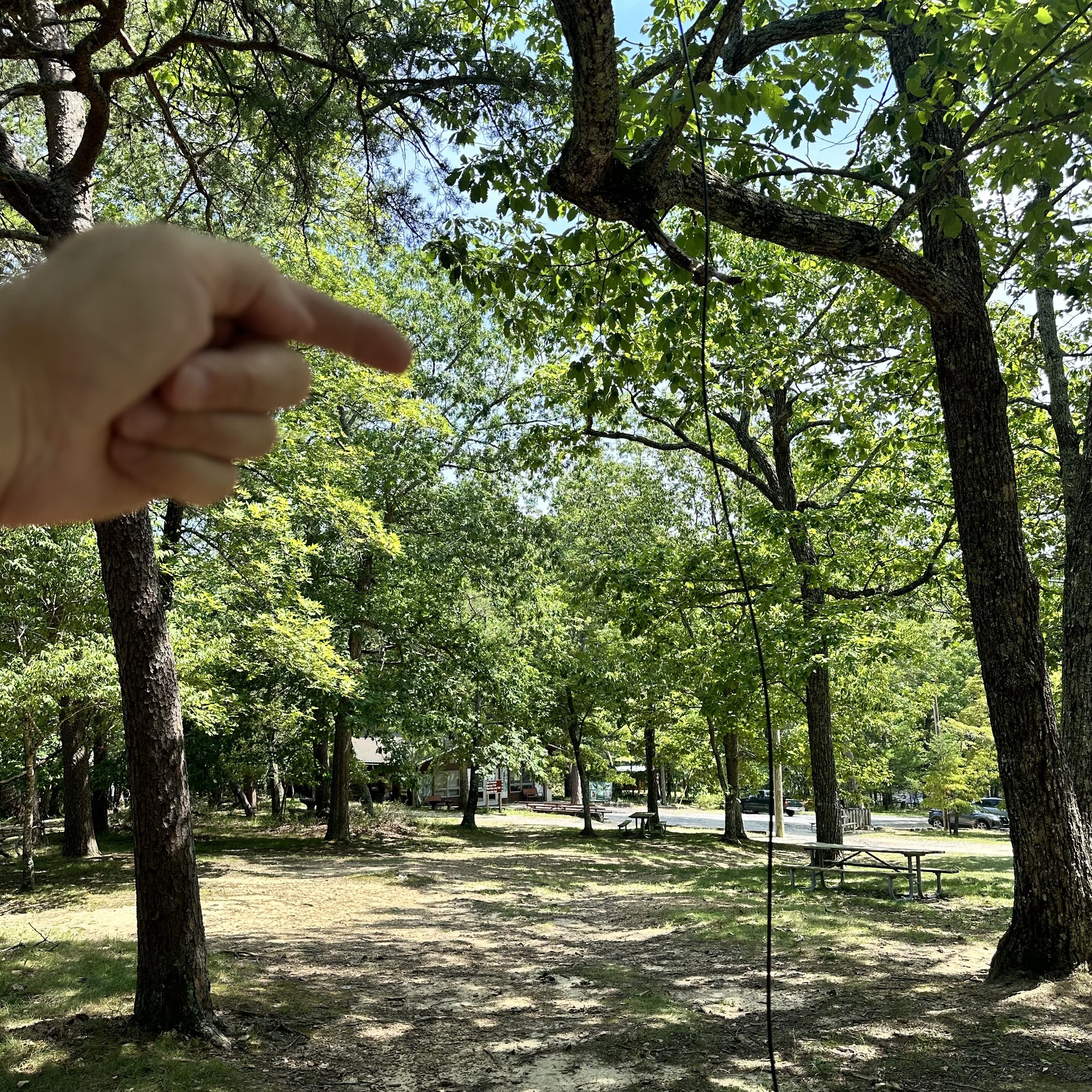
The far end is way up in this bright green tree behind my hand in the back ground. I am pointing to the end of the wire location in the tree.
Once I got the antenna up in the trees, I wanted to see what the plot looked like on the nanoVNA so I plugged it all in and this is what I got. The antenna is technically slightly long and is a little below optimal frequency on this day and rigged like this. I am not going to trim it at this point as I want to see what it does in other kinds of conditions like the winter and maybe right after a rain when it is still wet or maybe where it is set up over night and is soaked with dew. Even though it was off frequency a little in the configuration I had it in, the SWR was well within safe limits for operating any transceiver. I didn’t have a 2:1 SWR at any point when I was testing a particular band and that if fine with me if I don’t have to carry a tuner with me. There was a side bonus to this setup too, for some reason with the whole antenna elevated like I had it, it was giving me a wide coverage (read that as a low q) in the bottom of the 10 meter band. So low in fact, that it was within usable range even on 12 meters without needing any sort of a tuner! That is 40,20,15,12 & 10 in one antenna with zero mods needed. That is winning in my book.

This was the plot without anything other than the 15’ coax going to the common mode choke.
Now get this, I added a radial to the system, but in an unusual location. I put it on the end of the coax on the connector next to the common mode choke right next to the radio and just stretched it out over the ground. This length of wire was 9.5’ in length and when I did this, the plot changed a lot. I lost the 12 meter dip but picked up a much broader area between 20 and 15 meters to the point that 17 meters was below 2:1 SWR at this point. This means that if I add this simple piece of wire I now have a “no tuner needed” antenna that covers 6 bands! Almost everything is usable…sans 30 meters, so I am really happy with this antenna. The next time I set it up will be to test it as a sloper like it would be used if it is a portable setup and I had only one tree to rig it to. Then we will plot it again and see what I come up with. I am curious to see if the frequency of the dips changes with the relation of the end of the antenna to the ground. I dont think it will but RF is a fickle girl…lol.
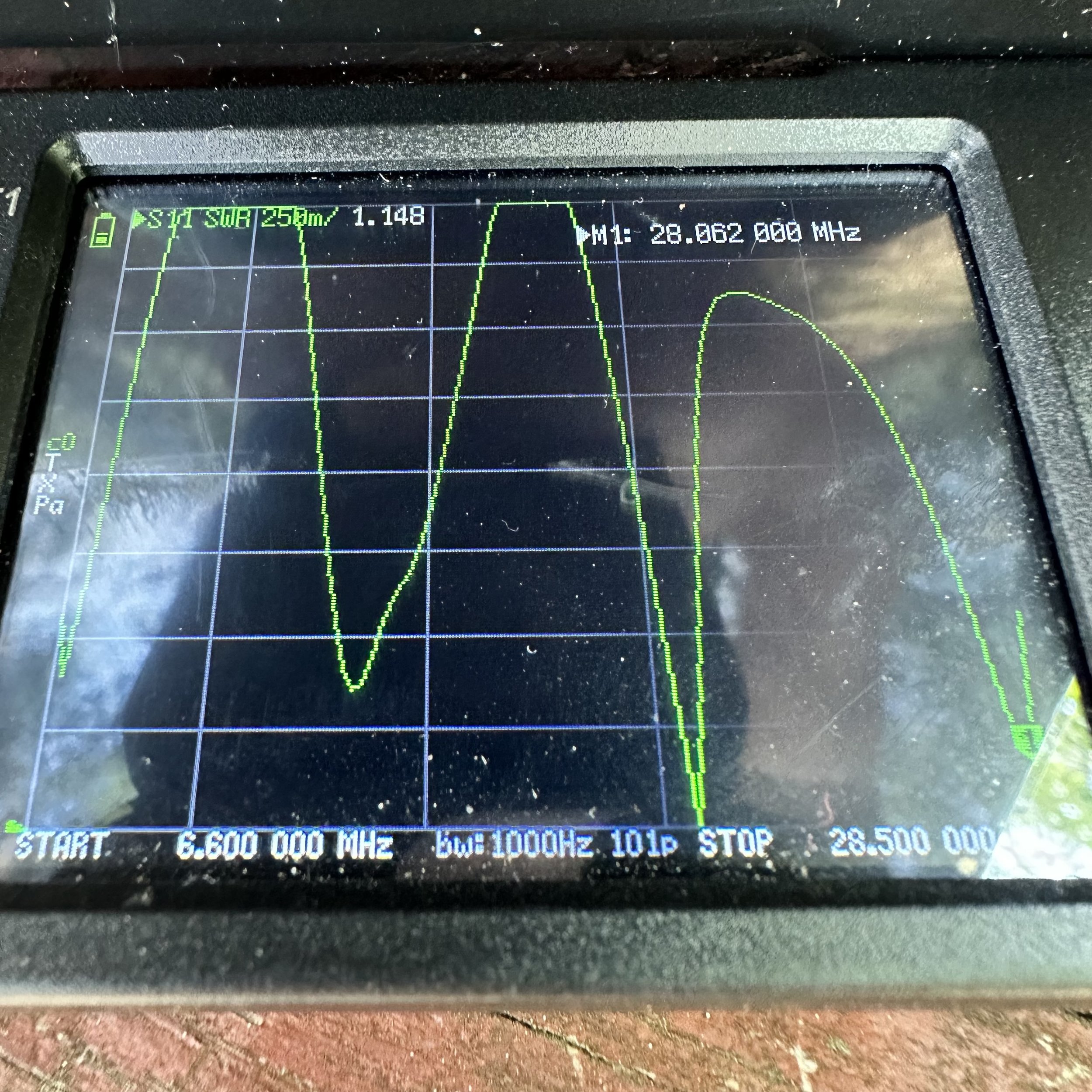
This plot is the aforementioned setup plus a 9.5’ length of wire tied to the coax connecter at the common mode choke.

This much wire is all that I needed to gain access to 17 meters without having to carry an antenna tuner with me, this is very liberating to be honest. Just adding a small radial to the system makes this super easy to use. The Reliance Antennas 40m Bugout EFHW comes with a winder to store in on as well as a carabiner clip to connect the far end to the cord. The transformer end has an eye bolt that works well for a hoist point to raise the other end of the antenna.

I next setup the Ten Tec Argonaut 5 radio on the table and connected all the stuff to make it work. Once it was powered up and ready, I plugged in the star of the show, my new N3ZN CW Key. He builds some really nice keys and I have walked by his table at several hamfests recently and today I decided that it was time to give one a whirl as they say. So I chose the smallest one he had at the show since I wanted it for POTA activations. The plan is to keep it in the Argonaut “GO BOX” that I built last year. It took me two trips to the field to learn to use it properly too. Since it is so small, if you have a heavy hand when you send it will move around a lot on you. The trick is to set the action light enough that you just have to touch the paddles to send the code, this way it is a light operation and the key stays put on the table like it should. These keys come with the cord hardwired to them so you cant buy a simple aux cable and plug it into the key, but it didn’t cause me any trouble so I don’t mind it. The installed cable is high quality and I have no doubt that it will last a very long time.

Once the antenna was squared away and I had my 17m “element” nearby, I was ready to crank up the radio. The new key plugged into the keyer I recently acquired from eBay and we are off to the races! Or so I thought as it turned out that KJ4BAD happened to be walking by and stopped in to see if I was doing POTA and we had a great chat for about 10 minutes or so about all things radio. I always enjoy running into other hams while out at a park.

I really like the Ten Tec Argonaut 5 radio, it has almost all of the CW functions that I use are on the surface. There is a could of things that you hit a button and then make the adjustments and you are good to go. The other thing that is great about this radio is that it has 20 watts of transmitter power. This is awesome when the bands are not as good as they were back in the winter. Also the DSP filtering works surprisingly well. It is also really good with other modes, but I just use it for CW… I might make a cable at some point to put the key into the front socket instead so it is simpler to connect the key. You see the mic key will key the radio so that means my little memory keyer will work in that socket. Who knows when I will do that though…


After we finished chatting I settled in for some POTA therapy and dialed around a little to find 15 was open with a bunch of stations on the air. I setup and start calling and you can see in the log that I only made two contacts before giving up and moving to 17 meters where I usually make several contacts but today I only netted one. Things were looking pretty dismal till I went to 20 meters. Once on 20 things turned around for me. I fairly quickly got the activation and proved out all the gear I had brought that day.
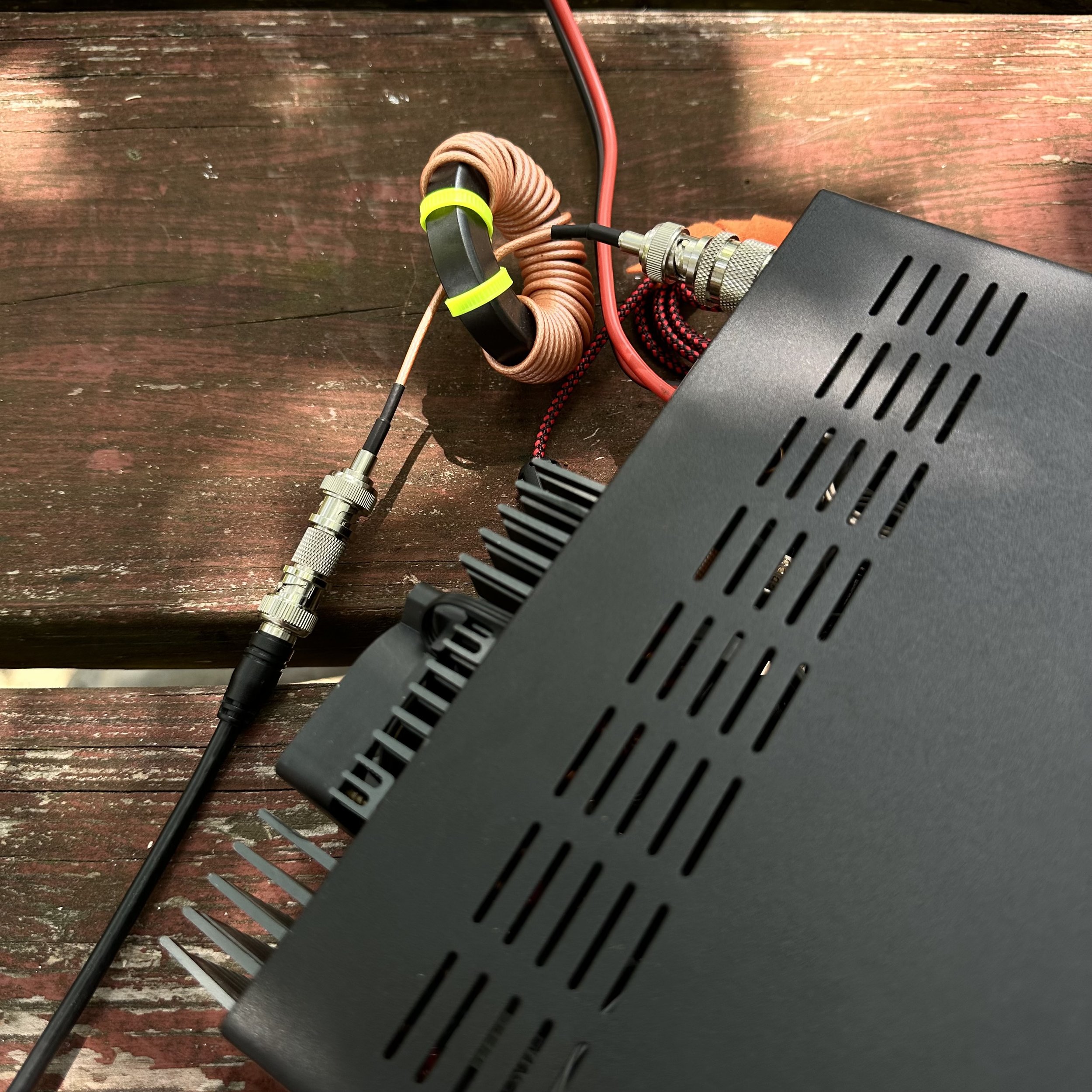
This photo shows where I would place the extra radial on the Coax connector. The coupling between the common mode choke and the feedline made for an easy spot to add it. I simply stripped the wire back a little and twisted the wire over this point. Simple as that. The easiest mod I have ever done to tune my antenna to another band in the history of ever.

This was the view I had today while operating, this is why I like POTA over other activities. The view is epic. So there you have it. My POTA “test and tune” trip in a simple blog post. Until next time, 72.
de WK4DS
Dalton Hamfest 2023 for a Ten Tec radio junkie…
Well, it is that time of year again. The Dalton Hamfest is one of our bigger local events and this year did not disappoint. Below is a Omni 6+ with matching speaker power supply (radio in the bottom of the stack) just like the one I use in my ham shack at home. This particular radio was found outside in the boneyard of all places. This is a wonderful radio that would work really well for anyone wanting to get on HF. It is especially good for CW, the receiver is just buttery smooth and wonderfully sensitive…I could go on about this radio for a long time, but suffice it to say, if your into CW and vintage radios, this one is hard to beat. It was basically the pinnacle of CW rigs in my opinion.

Aside from the usual vendors where you can get any number of new radios, antennas or other widgets associated with Amateur Radio, it has become something of a quest for me and Trey (KG4WBI) to find all of the Ten Tec gear we can find and photo document it without buying it! LOL we ALMOST came home with that Triton…(just take a gander at it below) it was in great condition and worked beautifully…
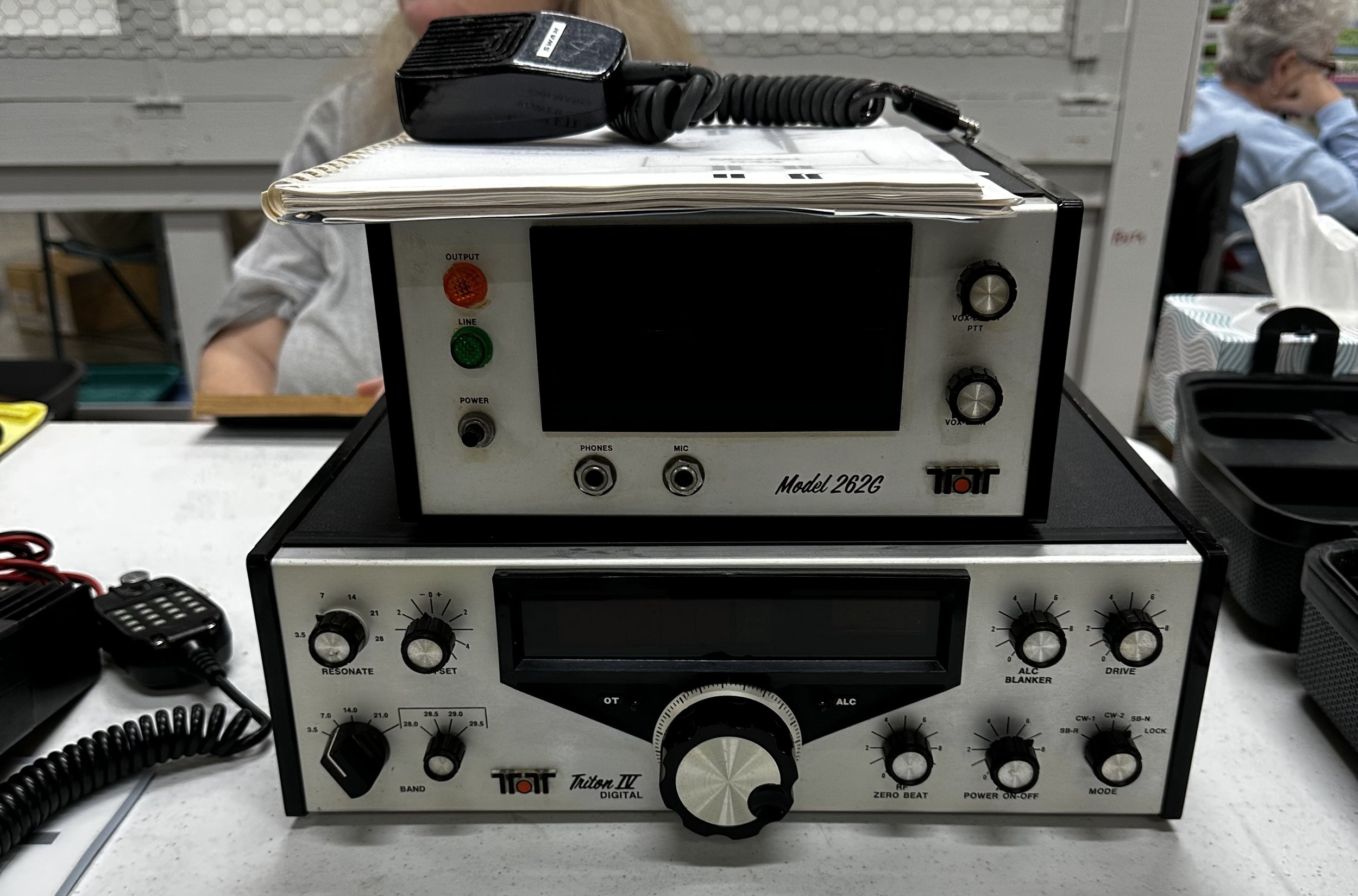
This year netted a incredible pile of photos that really impressed me when I started looking back through them. You see, while you’re walking around, you don’t notice that you have seen so many pieces of equipment until you start looking at the photos you’ve captured of them.


A prime example of this is the fact that we found two of the same kind of antenna tuner. Yet one looks like it was in a smokers ham shack and the other was not. I am pretty sure this is actually the case too as I have never known Ten Tec to do a run of gold trimmed radios or accessories.

Something that I did notice was the wide variety of Ten Tec radios that we’re at the hamfest this time, everything ranging from an old Triton and Argosy (pictured above with the matching power supply) all the way up to an Omni 7! By the way, that Omni 7 also has 6 meters… 😂 Once I added the Collins filters to my Omni 7 it is one of my favorite radios of all time. It works surprisingly well with just the stock filter but the selectivity just gets unreal with the additional 500hz and 300hz mechanical filters made by Collins.

One particular radio of interest that I have always been intrigued by, but have never really thought about buying is the Ten Tec Scout. This radio is unique in that it is a small, portable radio with a fairly powerful transmitter. I think it is 50 watts of transmitter power and to change bands, you replace the cartridge on the front of the radio with a different band module. This allows the radio to remain fairly small and still cover all the HF bands. This is a really forward thinking idea and Ten Tec is renowned for this. The Jupiter radio is a perfect example of their forward thinking, it laid the ground work for the whole Flex line of radios.
To have a whole set of these band modules is fairly hard to do and this gentleman, at the ham fest, had all of them except for one. He was missing the 30 meter module only from what I could see. This was a really impressive kit that he had and it was also in a nice pelican case and the price was really reasonable. This would make for a really awesome POTA rig or even a field day rig.

I guess it just proves that there is more out there available than you think when you just start adding it all up. Since I was just casually snapping cell phone photos as we walked around the ham first, I never really look at the camera roll until we were leaving, and that is when I realise we had seen so many different radios by just this one manufacturer, who is actually out of business at this point. There were even more radios from the typical Icom, Yeasu and Kenwood factions that were everywhere. There was plenty of equipment to choose from is my point.
It was nice to see that someone could still most likely find an obscure, vintage radio that they had been looking for, pretty easily, and to be honest there was a ton of Drake, Hammarlund and Collins radios as well. (That Drake TR7 really had me… I love the color scheme they chose especially well)
I have to give an honorable mention to another radio that is near to me that I have yet to own, and that is the Elecraft K2. There was a 10 watt version of this radio also for sale that day, and I was very VERY tempted to take it home with me…

But explaining to Teresa, why I brought another radio home was not something that I was looking forward to doing, so I left it sitting on the table and maybe cried a little…dont tell anyone… haha.
All was not lost though, as we did bring a radio home between the two of us. It turned out that Trey acquired a 2m Ten Tec HT that has been made out of pure hens teeth. He is actually working towards getting it operational again. He put it on a bench power supply and it did power up but it needs a few little things repaired on it. Currently it does not have a battery but he is looking for a battery to rebuild to put back on it. So if you know of someone that has a battery, even if it is trashed, please let me know as we can rebuild it, as long as it is complete.

Going to a hamfest for me, is more about community than equipment these days. I did grab a few ham stick antennas for my QRP radios when I do POTA activations, but other than that I did not get anything substantial at all. What I did most of the time instead was chat with friends, (whom all I had seen the night before at the club meeting LOL) and made a few more while at the tables talking about the really cool radios we found.
All in all, we had a great time today and if you have never been to a ham fest, I recommend you go to one just to see the spectacle of it. The bigger the better. Until next time, get your radio out!!!
72
de WK4DS
The WK4DS POTA Hunter Station Amateur Radio (and a little ragchewing too)
What does a simple POTA hunter HF station look like? Just like any other HF station… This is what mine looks like currently. If you haven’t already figured it out, I have a Ten Tec fetish and I don’t care 🤣 The Omni VI+ was a dream rig back when I first got into radio and I could not afford one at that time, but as time went on, I was able to piece together a nice station sans amplifier…for now… and I have really enjoyed using this old girl on the air. I also have the 238 manual tuner in the closet as well waiting on a time when I will need it.


My current station mainly consists of a Ten Tec Omni 6+ with matching power supply and automatic antenna coupler that I run primarily into a vertical antenna I have out in the yard. I still need to finish the installation of my wire antenna in the front yard in the trees so that I will have a second antenna to work with that will complement the station. I also have a splitter worked out to where I can set up and use my QRP radios in the shack easily. This allows me to test the radios and learn how to use them before I go into the field to do an activation. This reduces the stress of figuring out the radio in the field while trying to make contacts.


My current key of choice is the Ten Tec KR 40 keying module, this key is designed to work with their older radios and is able to do all sorts of things other than just keying output. It is an electronic work of art to simply be a key lol. I also have my other regular keys that the radio will operate with since it has a key input and a paddle input on the Omni. Not to be left out I also have a Logickey K3 keyer that I am going to get working as well. This will also make me have memory keying with my Omni since it does not natively have a memory keyer built in.


I am planning on adding a second HF rig to the shack to complement my Omni 6+ so that I can have the Omni calibrated and have a couple of small issues repaired on it and while it is out. Having the second rig makes it to where I will still be able to operate. I am currently searching for one of several radios to fit this position in my shack, such as the Ten Tec Jupiter/Omni 7, the Ten Tec Eagle, the Ten Tec Orion, or even something simple and small like a Kenwood TS 590 or similar. I really want nice filtering as I like to listen to CW on the air regularly and it is very tiring to listen to the bands with a lot of band noise. A radio with good roofing filters or IF filtering makes this a much more pleasurable experience. That is all my ham shack at home has in it to hunt stations with. My current antenna is a 17 m vertical that I can tune all the way down to 40 m and still have a decent signal going out. This is why I want to put a large wire antenna in the front yard. I really want to be able to work the lower bands and the large wire antenna will allow me to do that. Thank you for following along today and if you have not done it yet please subscribe to my blog thank you very much and hope to see you on the air soon. last but not least I have a good old 2 m radio to get on the local repeater and talk Symplex to my local buddies with. Everybody has to have a 2 m rig to get on the repeater ha ha.

73 WK4DS